Scientific Name
Terminalia amazonia
Trade Name
Nargusta
Family Name
Combretaceae
Synonyms
Terminalia odontoptera, Chuncoa amazonia, Chuncoa obovata, Gimbernata obvata
Common Names
Almendro, Amarillo carabazuelo, Amarillo de panama, Amarillon, Anangossiti, Angouchi, Araca, Bolador, Bullywood, Canshan, Chasemiich, Chicharro, Cochun, Coffee mortar, Cumbillo, Esemi, Fukadi, Ginja hoehoe, Guaba, Guacharaco, Guatuso, Guayabo, Guayabo leon, Guayabo negro, Guayabon, Guyabillo, Hill fukadi, Kil, Kung, Kwai, Leche amarillo, Matora, Merendiba branca, Monteclaro, Nangossiti, Naranjo, Nargusta, Pardillo negro, Pata de danto, Pau mulato brancho, Pookadi, Roble, Roble amarillo, Roble de esmeraldas, Roble macuelizo, Tamarotan, Tilautaea, Volador, White olive, White oliver
Regions of Distribution
Central America, Latin America, Oceania and S.E. Asia
Countries of Distribution [VIEW MAP]
Belize, Brazil, Colombia, Ecuador, French Guiana, Guatemala, Guyana, Honduras, Mexico, Panama, Peru, Trinidad and Tobago, Venezuela
Common Uses
Beams, Bedroom suites, Boat building (general), Boat building, Boat building: decking, Boat building: framing, Bridge beams, Bridge construction, Bridge joists, Building construction, Cabin construction, Cabinetmaking, Canoes, Chairs, Chests, Concealed parts (Furniture), Concrete formwork, Construction, Crossties, Decks, Decorative veneer, Desks, Dining-room furniture, Domestic flooring, Dowell pins, Dowells, Drawer sides, Factory construction, Figured veneer, Fine furniture, Floor lamps, Flooring, Form work, Foundation posts, Framing, Furniture , Furniture components, Furniture squares or stock, Furniture, Hatracks, Heavy construction, Joinery, Joists, Kitchen cabinets, Lifeboats, Light construction, Marine construction, Mine timbers, Planks, Plywood, Posts, Railroad ties, Turnery, Vehicle parts, Veneer, Veneer: decorative
Environmental Profile
| Status has not been officially assessed |
Distribution Overview
The natural growth range of the species extends from southern Mexico southward through Central America and into northern South America to Brazil and Peru. It is also found in Trinidad, and is a common tree in the Wallaba forests of Guyana. It is also regularly found in the forests of Belize.
Heartwood Color
| Brown | ||||||||||||
| Yellow | ||||||||||||
| Purple | ||||||||||||
| Red | ||||||||||||
| Yellow to golden-yellow to orange | ||||||||||||
| Greenish to greyish | ||||||||||||
| Pale brown | ||||||||||||
| Brown | ||||||||||||
| Reddish brown | ||||||||||||
| Olive-Brown |
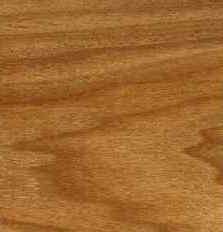
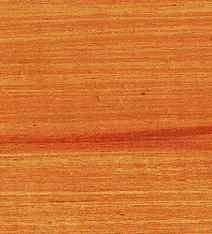
The heartwood has a variegated yellow-brown to olive-brown color, occasionally with clear reddish stripes or streaks.
Sapwood Color
| White to yellow | ||||||||||||
| Same as heartwood | ||||||||||||
| Not clearly differentiated from the heartwood | ||||||||||||
| Different than heartwood |
Grain
| Figure | ||||||||||||
| Interlocked | ||||||||||||
| Straight | ||||||||||||
| Stripe (figure) | ||||||||||||
| Wavy | ||||||||||||
| Crossed | ||||||||||||
| Closed | ||||||||||||
| Even | ||||||||||||
| Irregular | ||||||||||||
| Growth rings (figure) | ||||||||||||
| Rippled (figure) | ||||||||||||
| Spiral | ||||||||||||
| Variable (figure) | ||||||||||||
| Weak (figure) |
Texture
| Medium | ||||||||||||
| Medium | ||||||||||||
| Fine to medium |
Luster
| Lustrous | ||||||||||||
| Pronounced | ||||||||||||
| Medium to high |
Natural Growth Defects
Trees with trunk diameters above 20 to 25 inches (50 to 62 cm) are often hollow at the center.
Natural Durability
| Durable | ||||||||||||
| Durable | ||||||||||||
| Susceptible to marine borer attack | ||||||||||||
| Resistant to attack from termites (Isoptera) | ||||||||||||
| Moderately resistant to termite (Isoptera) attack | ||||||||||||
| Moderately durable | ||||||||||||
| Very durable | ||||||||||||
| Pinworms (ambrosia beetles) often present in the standing tree | ||||||||||||
| Pinworms (ambrosia beetles) are commonly present | ||||||||||||
| Susceptible to attack from powder post (Lyctid & Bostrychid) beetles | ||||||||||||
| Susceptible to attack from termites (Isoptera) | ||||||||||||
| Susceptible to attack by subterranean termites | ||||||||||||
| Resistant to wood staining fungal attack | ||||||||||||
| Resistant to attack from powder post (Lyctid & Bostrychid) beetles | ||||||||||||
| Resistant to attack by dry-wood insects | ||||||||||||
| Heartwood has high natural resistance to decay |
Species should preferably be used under protection from the elements since it has little or no resistance to the destructive effects of the weather.
Weathering
| Good |
Odor
| Has an odor | ||||||||||||
| No specific smell or taste |
Kiln Schedules
| Dry at a slow speed | ||||||||||||
| UK=C US=T3C2/T3C1 Fr=3 | ||||||||||||
| Dry at a moderate speed | ||||||||||||
| UK=B US=T2C2/T2C1 Fr=2 | ||||||||||||
| T3 – C2 (4/4); T3 – C1 (8/4) US |
Drying Defects
| Checking | ||||||||||||
| Distortion | ||||||||||||
| Severe surface checking | ||||||||||||
| Severe end splitting | ||||||||||||
| Slight twist/warp | ||||||||||||
| Moderate surface checking | ||||||||||||
| Moderate end spitting | ||||||||||||
| Slight end splitting | ||||||||||||
| Severe twisting/warping | ||||||||||||
| No surface checking | ||||||||||||
| May warp, check and split during degrade |
Ease of Drying
| Rapidly | ||||||||||||
| Reconditioning Treatement | ||||||||||||
| Little degrade | ||||||||||||
| Difficult | ||||||||||||
| Variable results. | ||||||||||||
| Moderate |
Center of thicker material is decidedly difficult to dry out.
Tree Identification
| Bole/stem form is buttressed | ||||||||||||
| Bole/stem form is straight | ||||||||||||
| Bole/stem form is cylindrical |
Comments
General finishing qualities are rated as good
Blunting Effect
| Severe dulling effect on tool edges | ||||||||||||
| Blunting effect on machining is moderate |
Boring
| Fair to good results | ||||||||||||
| Easy | ||||||||||||
| Responds well to boring operations |
Carving
| Fair to Good Results | ||||||||||||
| Relatively good response to carving operations |
Cutting Resistance
| Fairly difficult to saw |
Gluing
| Easy to glue | ||||||||||||
| Moderate gluing properties | ||||||||||||
| Glues well | ||||||||||||
| Difficult to glue |
Mortising
| Fair to Good Results | ||||||||||||
| Easy to mortise | ||||||||||||
| Good mortising properties |
Moulding
| Fair to Good Results | ||||||||||||
| Easy to mould | ||||||||||||
| Fairly easy to mould |
Movement in Service
| Medium |
Dimensional changes in response to fluctuations in atmospheric conditions are moderate after manufacture.
Nailing
| Possible if prebored | ||||||||||||
| Pre-boring required | ||||||||||||
| Difficult to nail |
Planing
| Fair to Good Results | ||||||||||||
| Easy to plane | ||||||||||||
| Planes well, to a good finish |
Straight-Grained material is easy to plane. Wood with roey grain may pluck or tear in planing and may require reduced cutting angles for better results.
Resistance to Impregnation
| Permeable heartwood | ||||||||||||
| Permeable sapwood | ||||||||||||
| Sapwood is extremely resistant | ||||||||||||
| Heartwood is extremely resistant | ||||||||||||
| Sapwood response to preservative treatment is variable | ||||||||||||
| Heartwood responds poorly to preservative treatment |
Response to Hand Tools
| Easy to Work | ||||||||||||
| Difficult to machine | ||||||||||||
| Easy to machine | ||||||||||||
| Responds poorly to hand tools | ||||||||||||
| Moderate working qualities |
Routing & Recessing
| Fair to Good Results |
Sanding
| Good sanding properties |
Screwing
| Possible if prebored | ||||||||||||
| Good screw holding properties | ||||||||||||
| Difficult to screw |
Turning
| Fair to Good Results | ||||||||||||
| Good results | ||||||||||||
| Easy to turn | ||||||||||||
| Good results |
Veneering Qualities
| There is slight to moderate drying degrade and the potential for buckles and splits | ||||||||||||
| Moderately easy to veneer | ||||||||||||
| Drying degrade is often moderate to severe, with collapse, buckles, and splilts | ||||||||||||
| Diifficult to veneer |
Steam Bending
| Poor | ||||||||||||
| Moderate | ||||||||||||
| Very poor |
Polishing
| Satisfactory results | ||||||||||||
| Good results | ||||||||||||
| Poor results | ||||||||||||
| Polishes to a smooth finish |
Staining
| Finish is generally satisfactory | ||||||||||||
| Finish is generally good |
Strength Properties
| Modulus of Elasticity (stiffness) = medium | ||||||||||||
| Max. crushing strength = medium | ||||||||||||
| Max. crushing strength = high | ||||||||||||
| Hardness (side grain) = medium | ||||||||||||
| Density (dry weight) = 46-52 lbs/cu. ft. | ||||||||||||
| Hardness (side grain) = hard | ||||||||||||
| Bending strength (MOR) = low | ||||||||||||
| Shrinkage, Radial = moderate | ||||||||||||
| Shrinkage, Tangential = moderate | ||||||||||||
| Shearing strength (parallel to grain) = high | ||||||||||||
| Bending strength (MOR) = high | ||||||||||||
| Shearing strength (parallel to grain) = low | ||||||||||||
| Shrinkage, Radial = large | ||||||||||||
| Density (dry weight) = 53-60 lbs/cu. ft | ||||||||||||
| Toughness-Hammer drop (Impact Strength) = low | ||||||||||||
| Shrinkage, Tangential = large | ||||||||||||
| Shearing strength (parallel to grain) = very low | ||||||||||||
| Shearing strength (parallel to grain) = very high | ||||||||||||
| Shearing strength (parallel to grain) = medium | ||||||||||||
| Modulus of Elasticity (stiffness) = high | ||||||||||||
| Shrinkage, Tangential = small | ||||||||||||
| Shrinkage, Tangential = fairly large | ||||||||||||
| Shrinkage, Radial = small | ||||||||||||
| Hardness (side grain) = very hard | ||||||||||||
| Hardness (side grain) = soft | ||||||||||||
| Shrinkage, Tangential = very small | ||||||||||||
| Shrinkage, Radial = very small | ||||||||||||
| Shrinkage, Radial = fairly large | ||||||||||||
| Resists denting and marring | ||||||||||||
| Modulus of Elasticity (stiffness) = very high | ||||||||||||
| Heavy | ||||||||||||
| Hardness = medium | ||||||||||||
| Compression strength (parallel to grain) = high | ||||||||||||
| Bending strength (MOR) = very high |
Bending strength (MOR) = medium
Numerical Data
| Item | Green | Dry | English |
| Bending Strength | 11494 | 16821 | psi |
| Crushing Strength | 1039 | 1205 | psi |
| Density | 48 | lbs/ft3 | |
| Hardness | 1809 | lbs | |
| Impact Strength | 31 | inches | |
| Maximum Crushing Strength | 5889 | 9056 | psi |
| Shearing Strength | 2089 | psi | |
| Static Bending | 7556 | 11084 | psi |
| Stiffness | 1867 | 2135 | 1000 psi |
| Toughness | 183 | inch-lbs | |
| Work to Maximum Load | 12 | 16 | inch-lbs/in3 |
| Specific Gravity | 0.63 | 0.76 | |
| Weight | 49 | 49 | lbs/ft3 |
| Radial Shrinkage | 4 | % | |
| Tangential Shrinkage | 7 | % | |
| Volumetric Shrinkage | 14 | % | |
| Item | Green | Dry | Metric |
| Bending Strength | 808 | 1182 | kg/cm2 |
| Crushing Strength | 73 | 84 | kg/cm2 |
| Density | 769 | kg/m3 | |
| Hardness | 820 | kg | |
| Impact Strength | 78 | cm | |
| Maximum Crushing Strength | 414 | 636 | kg/cm2 |
| Shearing Strength | 146 | kg/cm2 | |
| Static Bending | 531 | 779 | kg/cm2 |
| Stiffness | 131 | 150 | 1000 kg/cm2 |
| Toughness | 210 | cm-kg | |
| Work to Maximum Load | 0.84 | 1.12 | cm-kg/cm3 |
| Specific Gravity | 0.63 | 0.76 | |
| Weight | 785 | 785 | kg/m3 |
| Radial Shrinkage | 4 | % | |
| Tangential Shrinkage | 7 | % |
References
Acosta-Solis, M.,1960,Maderas Economicas del Ecuador y sus Usos,Editorial Casa de la Culhra Ecuatoriana Quito
Armstrong, F.H.,1960,The Strength Properties of Timber,Forest Products Research Laboratory, London Bulletin,No.45
Belize,1946,42 Secondary Hardwood Timbers of British Honduras,British Honduras Forest Department Bulletin,No.1
Bena, P.,1960,Essences Forestieres de Guyane,Bureau Agricole et Forestier Guyanais Guyana
Berni, C.A., Bolza, E., Christensen, F.J.,1979,South American Timbers – The Characteristics, Properties and Uses of 190,Species,C.S.I.R.O Div. Building Research
Boone, R.S., C.J. Kozlik, P.J. Bois, E.M. Wengert. 1988. Dry Kiln Schedules for Commercial Hardwoods – Temperate and Tropical. USDA, Forest Service, General Technical Report FPL-GTR-57, Forest Products Laboratory, Madison, Wisconsin.
Brazier, J.D., Franklin, G.L.,1967,An Appraisal of the Wood Characteristics and Potential Uses of some,Nicaraguan Timbers,FAO for Forest Products Research Laboratory, Princes Risborough
Brooks, R.L., et al,1941,Durability tests on Untreated Timbers in Trinidad,Caribbean Forester,2(3,pp101-119
Brown, W.H.,1978,Timbers of the World No.1 Africa,TRADA, Red Booklet Series
Brown, W.H.,1978,Timbers of the World, No. 3 Southern Asia,TRADA, Red Booklet Series
Brown, W.H.,1978,Timbers of the World, No. 9 Central America and the Caribbean,TRADA, Red Booklet Series
CAOBA International, San Francisco, California. 1993. Personal Communication.
Chudnoff, M.,1984,Tropical Timbers of the World,U.S.A. Department of Agriculture, Forest Service, Forest Products,Laboratory, Madison.
Clifford, N.,1953,Commercial Hardwoods – Their Characteristics Identification and,Utilization,Sir Isaac Pitman & Sons Ltd. London
Dickinson, F.E.,1949,Properties and Uses of Tropical Woods 1,Tropical Woods,13(95,pp1-140
Erfurth, T., Rusche, H.,1976,The Marketing of Tropical Wood B. Wood Species from S. American Tropical,Moist Forests,F.A.O. Forestry Department
Fanshawe, D.B.,1954,Forest Products of British Guiana Part 1 Principal Timbers,Forest Department British Guiana Forestry Bulletin (New Series 2nd,Edition,No.1
Flores Rodriguez, L.J.,1969,Description Caracteristicas y usos de 25 Maderas tropicales,Mexicanas,Camera Nacional de la Industria de la Construccion Serie Maderas de Mexico
Forest Products Research Laboratory, U.K.,1945,A Handbook of Empire Timbers,Department of Scientific and Industrial Research Forest Products Research
Forest Products Research Laboratory, U.K.,1967,The Steam Bending Properties of various timbers,Forest Products Research Laboratory, Princes Risborough, Leaflet,No.45
Forest Products Research Laboratory, U.K.,1969,The Movement of Timbers,Forest Products Research Laboratory, Princes Risborough Technical Note,No.38
France – C.T.F.T.,1973,Investigations and Tests carried out on Tropical Timber by several,Research Laboratories,CTFT
Highley, T.L., Scheffer, T.C.,1970,Natural Decay Resistance of 30 Peruvian Woods,U.S.A. Agriculture Department, Forest Service, Forest Products Laboratory,,Madison Research Paper,No.143
I.U.F.R.O.,1973,Veneer Species of the World,Assembled at F.P.L. Madison on behalf of I.U.F.R.O. Working Party on,Slicing and Veneer Cutting
Kribs, D.A.,1950,Commercial and Foreign Woods on the American Market (a manual to their,structure, identification, uses and distribution,U.S.A. Penn. State College, Tropical Woods Laboratory
Lamb, A.F.A., Wangaard, F.F.,1950,The Gluing Properties of certain Tropical American Woods,Yale Univ. School of Forestry Technical Report,4
Lavers, G.M. 1966. The Strength Properties of Timbers. Forest Products Research Bulletin, No. 50. Ministry of Technology, Her Majesty’s Stationery Office, London.
Lavers, G.M.,1983,The Strength Properties of Timber (3rd ed. revised Moore G.L.,Forest Products Research Laboratory, Princes Risborough, Building Research,Establishment Report (formerly Bulletin No.50)
Lincoln, W.A. 1986. World Woods in Color. Linden Publishing Co. Inc., Fresno, California.
Little, E.L.,1948,A Collection of Tree Specimens from Western Ecuador,Caribbean Forester,9(3,pp215-98
Longwood, F.R.,1962,Commercial Timbers of the Caribbean,U.S.A. Department of Agriculture, Agriculture Handbook,No.207
Marshall, R.C.,1934,Trees of Trinidad and Tobago,Government Printer Port of Spain Trinidad
Marshall, R.C.,1939,Silviculture of the trees of Trinidad and Tobago – British West Indies,O.U.P.,London
Perpetua Hardwoods. Sea Star Trading Co. – Purveyors of Fine Wood. Newport, Oregon. Personal Communication, 1993.
Polak, A.M.,1992,Major Timber Trees of Guyana A Field Guide,The Tropenbos Foundation Wageningen, The Netherlands
Record, S.J., Hess, R.W.,1943,Timbers of the New World,Yale University Press
Record, S.J.,1927,Trees of Honduras,Tropical Woods,10, pp10-47
Scheffer, T.C., Duncan, C.G.,1947,The Decay Resistance of certain Central American and Ecuadorian Woods,Tropical Woods,12(92, PP1-24
Smith, D.N.,1959,The Natural Durability of Timber,Forest Products Research Laboratory, Princes Risborough, Building Research,Establishment Record,No.30
Takahashi, A.,1975,Compilation of data on the Mechanical Properties of Foreign Woods (Part 2,Central and South America,Shimane University, Japan, Research Report on Foreign Wood No.4
Tim Mahoney. Handloggers Hardwood Lumber, Larkspur, California. Personal Communication, 1993.
Timber Development Association Ltd.,1948,Notes on Ecuadorian Timbers,TRADA, Timber Information,35,pp5
Volkart, C.,1965,Recopilacion dedatos sobre propiedacies y usos maderos del Bosque Tropical,de las Costa Atlantica de Nicaragua,Turrialba,15(1, pp43-57
Wangaard, F.F., and A.F. Muschler. 1952. Tropical Woods – Properties and Uses of Tropical Woods, Volume III, No. 98. School of Forestry, Yale University, New Haven, Connecticut.
Wangaard, F.F., Muschler, A.F.,1952,Properties and Uses of Tropical Woods 3,Tropical Woods,14(98, pp1-190
Wangaard, F.F.,1951,The Physical Properties of Tropical Woods,F.A.O. For. & For. Prod. Studies Series No.3 Tropical Woods and Ag.,Residues as sources of pulp,pp10-16
Wolcott, G.N.,1950,An Index to the Termite Resistance of Woods,Agricultural Experimental Station, University of Puerto Rico Bulletin,No.85
Woods, R.P.,1949,Timbers of South America,TRADA, Red Booklet Series