Scientific Name
Cedrela huberi
Trade Name
Acajou rouge
Family Name
Meliaceae
Common Names
Acajou rouge, Ceder, Cedrat, Cedre rouge, Cedro, Cedro branco, Cigar box, Cigar box cedar, Epi, Kapere, Red cedar, Soeren, Spanish cedar, Thitkado, Toon, Youhom
Regions of Distribution
Central America, Latin America
Countries of Distribution [VIEW MAP]
Bahamas, Brazil, Cuba, Dominican Republic, French Guiana, Guyana, Haiti, Honduras, Jamaica, Suriname
Common Uses
Bedroom suites, Boat building, Building materials, Cabinetmaking, Canoes, Chairs, Chests, Cigar boxes, Concealed parts (Furniture), Decorative plywood, Decorative veneer, Desks, Dining-room furniture, Dowell pins, Dowells, Drawer sides, Drum sticks, Exterior trim & siding, Exterior uses, Figured veneer, Fine furniture, Floor lamps, Furniture , Furniture components, Furniture squares or stock, Hatracks, Interior construction, Interior trim, Kitchen cabinets, Lifeboats, Living-room suites, Millwork, Moldings, Musical instruments , Office furniture, Organ pipes, Paneling , Piano keys, Planks, Shingles, Shipbuilding
Environmental Profile
The environmental status of this species within its geographical boundaries has not been officially determined. The geographical range of Cedrela is throughout Latin America, from Mexico to Argentina, except Chile. The trees prefer rich, well-drained humid soils, but may also be found growing on drier hillsides
Heartwood Color
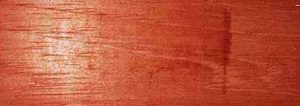
The heartwood is pink to pale pink brown or reddish brown when freshly cut. The wood darkens upon exposure to a dark reddish brown, sometimes with a purplish tinge. Resin marks may be present in the wood
Sapwood Color
| White to yellow | ||||||||||||
| Pinkish | ||||||||||||
| Clearly differentiated from the heartwood |
Timber from younger or fast-grown trees is commonly paler in color
Grain
| Even | ||||||||||||
| Interlocked | ||||||||||||
| Straight | ||||||||||||
| Figure | ||||||||||||
| Variable (figure) |
| Variable figure | ||||||||||||
| Straight | ||||||||||||
| Shallowly interlocked |
Texture
| Coarse | ||||||||||||
| Medium | ||||||||||||
| Uniform | ||||||||||||
| Uneven | ||||||||||||
| Medium to coarse | ||||||||||||
| Fine | ||||||||||||
| Coarse |
Luster
| Low | ||||||||||||
| High |
The wood has moderate to high golden luster.
Natural Durability
| Moderately durable | ||||||||||||
| Very suitable for exterior applications | ||||||||||||
| Very high natural resistance | ||||||||||||
| Sapwood susceptible to attack by powder post beetles | ||||||||||||
| Moderately resistant to decay | ||||||||||||
| Liable to attack by marine borers |
The wood is highly resistant to attack by termites in the West Indies, and moderately so in West Africa
Odor
The wood has a fragrant, cedary scent due to the presence of oil which may exude and appear on the surface of the timber as a sticky resin
Kiln Schedules
| Schedule H (4/4) United Kingdom | ||||||||||||
| 10 – D4S (4/4); T8 – D3S (8/4) US |
Drying Defects
| Slight twist/warp | ||||||||||||
| Slight collapse and honeycomb | ||||||||||||
| No surface checking | ||||||||||||
| Moderate collapse and honeycombing | ||||||||||||
| Expect severe degrade due to knots, splits, and loosening |
Ease of Drying
| Fairly Easy | ||||||||||||
| Easy | ||||||||||||
| Dries at a fairly rapid rate |
Tree Size
| Bole length is 0-10 m | ||||||||||||
| Tree height is 10-20 m | ||||||||||||
| Tree height is 20-30 m |
Product Sources
The ITTO reports that a very important source of timber. The timber is exported regularly, especially as square-edged timber and veneer.
Comments
Volatiles in the material may restrict the use of the wood in some applications. Timber from younger or fast-grown trees is commonly less resinous
Blunting Effect
| Blunting effect on machining is slight | ||||||||||||
| Blunting effect on machining is moderate |
Boring
The wood is difficult to bore cleanly
Carving
| Easy to carve |
Cutting Resistance
| Easy to saw |
The wood saws without too much difficulty, though there may be a tendency towards woolliness, and resin may clog tools. Cross-cutting and narrow bandsawing operations are satisfactorily
Gluing
| Satisfactory gluing properties |
Mortising
| Good mortising properties |
Moulding
A French head yields the most satisfactory moulding results
Movement in Service
| Stable |
Nailing
| Satisfactory nailing properties | ||||||||||||
| Holds nails well |
Planing
A good finish may be produced in planing if the cutting angle is reduced to 20 degrees
Resistance to Impregnation
| Sapwood is permeable | ||||||||||||
| Heartwood is resistant | ||||||||||||
| Heartwood is extremely resistant |
Response to Hand Tools
| Easy to machine |
Routing & Recessing
| Good in both routing and recessing. |
Turning
| Good results |
Steam Bending
The wood is suitable for bends of moderate radius of curvature
Polishing
| Surface treatment advised | ||||||||||||
| Good results |
Staining
| Stains well |
Strength Properties
| Weight = medium | ||||||||||||
| Soft | ||||||||||||
| Max. crushing strength = medium | ||||||||||||
| Dents and mars easily | ||||||||||||
| Compression strength (parallel to grain) = medium | ||||||||||||
| Bending strength (MOR) = high |
The species has average, or medium, density.
Numerical Data
| Item | Green | Dry | English |
| Bending Strength | 6595 | 11074 | psi |
| Crushing Strength | 382 | 696 | psi |
| Density | 25 | lbs/ft3 | |
| Hardness | 559 | lbs | |
| Maximum Crushing Strength | 3038 | 5890 | psi |
| Shearing Strength | 1176 | psi | |
| Static Bending | 3940 | 7154 | psi |
| Stiffness | 1147 | 1392 | 1000 psi |
| Toughness | 80 | inch-lbs | |
| Work to Maximum Load | 7 | 12 | inch-lbs/in3 |
| Specific Gravity | 0.34 | 0.37 | |
| Weight | 25 | 20. | lbs/ft3 |
| Radial Shrinkage | 4 | % | |
| Tangential Shrinkage | 6 | % | |
| Volumetric Shrinkage | 10 | % | |
| Item | Green | Dry | Metric |
| Bending Strength | 463 | 778 | kg/cm2 |
| Crushing Strength | 26 | 48 | kg/cm2 |
| Density | 400 | kg/m3 | |
| Hardness | 253 | kg | |
| Maximum Crushing Strength | 213 | 414 | kg/cm2 |
| Shearing Strength | 82 | kg/cm2 | |
| Static Bending | 277 | 502 | kg/cm2 |
| Stiffness | 80 | 97 | 1000 kg/cm2 |
| Toughness | 92 | cm-kg | |
| Work to Maximum Load | 0.49 | 0.84 | cm-kg/cm3 |
| Specific Gravity | 0.34 | 0.37 | |
| Weight | 400 | 320. | kg/m3 |
| Radial Shrinkage | 4 | % | |
| Tangential Shrinkage | 6 | % |
References
Boone, R.S., C.J. Kozlik, P.J. Bois, E.M. Wengert. 1988. Dry Kiln Schedules for Commercial Hardwoods – Temperate and Tropical. USDA, Forest Service, General Technical Report FPL-GTR-57, Forest Products Laboratory, Madison, Wisconsin.
Chichignoud, M., G. Deon, P. Detienne, B. Parant, and P. Vantomme. 1990. Tropical Timber Atlas of Latin America. International Tropical Timber Organization (ITTO, Centre Technique Forestier Tropical, Division of CIRAD, 45 bis Avenue de la Belle Gabrielle, Nogent-sur-marne, CEDEX, France.
Chudnoff, M.,1984,Tropical Timbers of the World,U.S.A. Department of Agriculture, Forest Service, Forest Products,Laboratory, Madison.
HMSO. 1981. Handbook of Hardwoods, 2nd Edition. Revised by R. H. Farmer. Department of the Environment, Building Research Establishment, Princes Risborough Laboratory, Princes Risborough, Aylesbury, Buckinghamshire.
Wangaard, F.F., and A.F. Muschler. 1952. Tropical Woods – Properties and Uses of Tropical Woods, Volume III, No. 98. School of Forestry, Yale University, New Haven, Connecticut.