Scientific Name
Enantia chlorantha
Trade Name
African yellow wood
Family Name
Annonaceae
Common Names
African yellow wood, Banuke, Baoue, Bawe, Belvi, Bololo, Bonuke, Bonuku bololo, Bopalo, Chibo, Debima, Dua sika, Dubuma, Ehranbabogo, Erenbavbogo, Esabawogo, Esuro, Gbawe, Kakerim, Kakerin, Koduben, Kpaini, Mbawe, Mfo, Mfol, Mfoo, Moambe jaune, Mpouley, Muamba jaune, Nfoo, Nje, Njie, Osomolu, Osopupa, Sohn, Woyoyo, Yaru, Yellow wood
Regions of Distribution
Africa
Countries of Distribution [VIEW MAP]
Angola, Cameroon, Congo, Gabon, Guinea, Ivory Coast, Liberia, Nigeria, Zaire
Common Uses
Agricultural implements, Boat building (general), Boxes and crates, Cabinetmaking, Canoes, Carvings, Chemical derivatives, Flooring, Furniture, Joinery, Light construction, Matches, Millwork, Mine timbers, Particleboard, Plywood, Poles, Posts, Pulp/Paper products, Sporting Goods, Tool handles, Turnery, Vehicle parts, Veneer: decorative
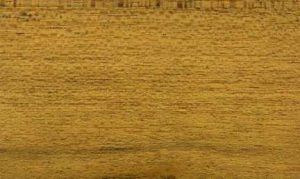
Heartwood Color
| Brown | ||||||||||||
| Green/grey | ||||||||||||
| Yellow to golden-yellow to orange | ||||||||||||
| Greenish to greyish |
Sapwood Color
| White | ||||||||||||
| Yellow | ||||||||||||
| Color not distinct from heartwood |
Grain
| Straight | ||||||||||||
| Even |
| Straight |
Texture
| Medium | ||||||||||||
| Fine | ||||||||||||
| Coarse | ||||||||||||
| Fine to medium | ||||||||||||
| Medium | ||||||||||||
| Fine |
Luster
| Medium | ||||||||||||
| Lustrous |
Natural Durability
| Non-durable | ||||||||||||
| Perishable | ||||||||||||
| Non-resistant to powder post beetles | ||||||||||||
| Susceptible to insect attack | ||||||||||||
| Susceptible to attack from termites (Isoptera) | ||||||||||||
| Susceptible to attack from powder post (Lyctid & Bostrychid) beetles | ||||||||||||
| Perishable | ||||||||||||
| Non durable | ||||||||||||
| Moderately durable | ||||||||||||
| Heartwood is susceptible to wood staining fungal attack | ||||||||||||
| Susceptible to marine borer attack | ||||||||||||
| Pinworms (ambrosia beetles) are commonly present |
Kiln Schedules
| Drying (speed) is fast |
Tree Identification
| Bole/stem form is not buttressed |
Tree Size
| Trunk diameter is 100-150 cm | ||||||||||||
| Tree height is 30-40 m | ||||||||||||
| Tree height is 10-20 m | ||||||||||||
| Tree height is 20-30 m | ||||||||||||
| Bole length is 10-20 m | ||||||||||||
| Bole length is 0-10 m |
Comments
General finishing qualities are rated as good
Blunting Effect
| Little |
Cutting Resistance
| Cutting Resistance with dry wood is easy |
Gluing
| Easy to glue |
Nailing
| Easy to nail |
Planing
| Poor to Very Poor Results | ||||||||||||
| Planes well, to a good finish |
Response to Hand Tools
| Easy to Work | ||||||||||||
| Fairly Difficult to Difficult to Work | ||||||||||||
| Easy to machine |
Polishing
| Good results |
Strength Properties
| Shrinkage, Tangential = small | ||||||||||||
| Shrinkage, Radial = small | ||||||||||||
| Density (dry weight) = 31-37 lbs/cu. ft. | ||||||||||||
| Shrinkage, Tangential = very small | ||||||||||||
| Shrinkage, Radial = very small | ||||||||||||
| Max. crushing strength = medium | ||||||||||||
| Bending strength (MOR) = medium | ||||||||||||
| Modulus of Elasticity (stiffness) = very low | ||||||||||||
| Density (dry weight) = 23-30 lbs/cu. ft. | ||||||||||||
| Bending strength (MOR) = low | ||||||||||||
| Bending strength (MOR) = high | ||||||||||||
| Shrinkage, Volumetric = very small | ||||||||||||
| Shrinkage, Volumetric = small | ||||||||||||
| Shrinkage, Volumetric = moderate | ||||||||||||
| Shrinkage, Tangential = moderate | ||||||||||||
| Shrinkage, Tangential = fairly large | ||||||||||||
| Shrinkage, Radial = moderate | ||||||||||||
| Shearing strength (parallel to grain) = very low | ||||||||||||
| Modulus of Elasticity (stiffness) = low | ||||||||||||
| Max. crushing strength = low | ||||||||||||
| Hardness (side grain) = very soft | ||||||||||||
| Hardness (side grain) = soft |
Numerical Data
| Item | Green | Dry | English |
| Bending Strength | 9615 | 14970 | psi |
| Density | 30 | lbs/ft3 | |
| Hardness | 657 | lbs | |
| Maximum Crushing Strength | 3472 | 5777 | psi |
| Shearing Strength | 882 | psi | |
| Stiffness | 1131 | 1321 | 1000 psi |
| Weight | 29 | 25 | lbs/ft3 |
| Radial Shrinkage | 3 | % | |
| Tangential Shrinkage | 6 | % | |
| Volumetric Shrinkage | 8 | % | |
| Item | Green | Dry | Metric |
| Bending Strength | 676 | 1052 | kg/cm2 |
| Density | 480 | kg/m3 | |
| Hardness | 298 | kg | |
| Maximum Crushing Strength | 244 | 406 | kg/cm2 |
| Shearing Strength | 62 | kg/cm2 | |
| Stiffness | 79 | 92 | 1000 kg/cm2 |
| Weight | 464 | 400 | kg/m3 |
| Radial Shrinkage | 3 | % | |
| Tangential Shrinkage | 6 | % |
References
Bolza, E., Keating, W.G.,1972,African Timbers – the Properties, Uses and Characteristics of 700 Species,C.S.I.R.O. Div. of Building Research
Cooper, G.P., Record, S.J.,1931,The Evergreen Forests of Liberia,Yale School Forestry Bulletin,31,pp1-153
Erfurth, T., Rusche, H.,1976,The Marketing of Tropical Wood A. Wood Species from African Moist Forests,F.A.O. Forestry Department
France – C.T.F.T./C.T.B.,1982,Guide pour le Choix des Essences Deroulables-pour la fabrication du,contreplaque,C.T.F.T./C.T.B. France
Gutierrez Oliva, A., Plaza Pulgar, F.,1967,Caracteristicas fisico-mecanicas de las maderas Espanolas. (Physical and,mechanical properties of Spanish timbers.,Min.Agric./Dir.Gen Montes/Instituto Forestral de Investigaciones,y,Experiencias, Madrid pp102
Hedin, L.,1930,Etude sur la Foret et les Bois du Cameroun,Haut-Commissaire de la Cameroun
Keay, R.W.J., et al,1960,Nigerian Trees Vol.1,Nigeria Federal Department of Forest Research, Ibadan
Kennedy, J.D.,1936,Forest Flora of Southern Nigeria,Government Printer Lagos
Sallenave, P.,1955,Proprietes Phyiques et Mecaniques des Bois Tropicaux de l’Union Francaise,C.T.F.T
Sallenave, P.,1964,Proprietes Physiques et Mecaniques des Bois Tropicaux (Premier Supplement,C.T.F.T. Publ.,no.23
Takahashi, A.,1978,Compilation of Data on the Mechanical Properties of Foreign Woods (Part,III) Africa,Shimane University, Japan, Research Report on Foreign Wood No. 7
United Kingdom – H.M.S.O.,1954,Report of the Matchwood Working Party,H.M.S.O. for the Board of Trade and Ministry of Materials
Unwin, A.H.,1920,West African Forests and Forestry,T. Fisher Unwin Ltd. London