Scientific Name
Erythrophleum suaveolens
Trade Name
Tali
Family Name
Leguminosae
Synonyms
Fillaea suaveolen
Common Names
A-kon, Aba, Abawa, Adjuga, Akpa, Akpa etuidiwi, Akwir, Alui, Arue, Atiemia, Atiuhia, Atsa, Baier, Baska, Bentabe, Betiche, Betomo, Bolondo, Boutite, Buirame, Buirane, Bungoro, Burene, Digpende, Earamor, Elegue-muani, Ellong, Elon, Elondo, Elone, Eloun, Elui, Elun, Erue, Erui, Erui-alui, Erun, Erun obo, Etsa, Gbangba-gbende, Gogbei, Gogwi, Gue, Guhie, Guilutu, Gwaska, Idip, Ifwon, Inyi, Inyin, Ipomi, Jallin baro, Jru, Ka-kontha, Kassa, Kbande, Keke-au, Kekeu, Koe-kon, Kokudabo, Kulenten, Kwon, Macone, Mancone, Manconi, Mbaraka, Mbele, Meli, Missanda, Mkarati, Mkelekele, Mkola, Muave, Mumara, Mwavi, N’kassa, Ndom, Ngogbei, Nkassa, Nko, Odiodi, Oginni, Oginyi, Orachi, Ordeal tree, Orhue, Ovinyin, Peli, Potrodom, Red water tree, Sachi, Sahi, Sangay, Sasswood, Sassy bark, Tali, Tali y roble africano, Talo, Tehi, Telehi, Teli, Tsa
Regions of Distribution
Africa
Countries of Distribution [VIEW MAP]
Cameroon, Congo, Equatorial Guinea, Gabon, Gambia, Ghana, Guinea Bissau, Ivory Coast, Kenya, Mozambique, Nigeria, Senegal, Sierra Leone, Tanzania, Uganda, Zaire, Zambia
Common Uses
Agricultural implements, Boat building (general), Bridge beams, Bridge construction, Bridge joists, Building construction, Building materials, Cabin construction, Cabinetmaking, Canoes, Charcoal, Construction, Cooperages, Decks, Docks, Dockwork, Domestic flooring, Exterior trim & siding, Exterior uses, Factory construction, Flooring, Flooring: commercial heavy traffic, Flooring: industrial heavy traffic, Furniture, Harbor work, Heavy construction, Joinery (external): ground contact, Joinery, Light construction, Marine construction, Millwork, Mine timbers, Parquet flooring, Piling, Poles, Posts, Railroad ties, Shakes, Sheathing, Shingles, Siding, Sporting Goods, Sub-flooring, Turnery, Vats, Vehicle parts, Wharf construction, Wheels
Environmental Profile
| Status has not been officially assessed |
Distribution Overview
Found in gallery forests in the northern and central parts of Mozambique.
Heartwood Color
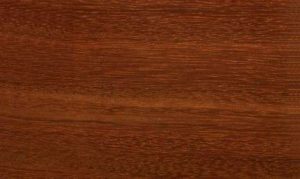
| Brown | ||||||||||||
| Green/grey | ||||||||||||
| Yellow | ||||||||||||
| Red | ||||||||||||
| Orange | ||||||||||||
| Black | ||||||||||||
| White | ||||||||||||
| Pink | ||||||||||||
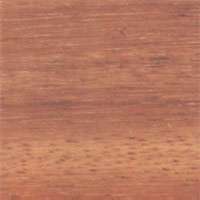
| Reddish brown | ||||||||||||
| Brown | ||||||||||||
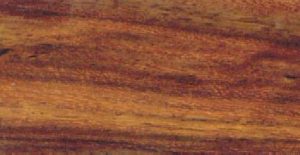
| Yellow to golden-yellow to orange | ||||||||||||
| Greenish to greyish | ||||||||||||
| Dark brown | ||||||||||||
| Yellowish brown | ||||||||||||
| Red | ||||||||||||
| Pale red to pink | ||||||||||||
| Darkens significantly upon exposure | ||||||||||||
| Dark brown |
Species from East Africa are lighter in color
Sapwood Color
| White | ||||||||||||
| Yellow | ||||||||||||
| White to yellow | ||||||||||||
| Well defined | ||||||||||||
| Pinkish | ||||||||||||
| Paler than heartwood | ||||||||||||
| Clearly differentiated from the heartwood |
Grain
| Interlocked | ||||||||||||
| Figure | ||||||||||||
| Distinct (figure) |
| Interlocked | ||||||||||||
| Distinct figure |
Typically highly interlocked, but is occasionally slightly interlocked.
Texture
| Fine | ||||||||||||
| Medium | ||||||||||||
| Coarse | ||||||||||||
| Medium | ||||||||||||
| Fine |
Luster
| Medium | ||||||||||||
| Low | ||||||||||||
| Lustrous |
Natural Durability
| Durable | ||||||||||||
| Resistant to marine borers | ||||||||||||
| Very durable | ||||||||||||
| Resistant to termites | ||||||||||||
| Moderately durable | ||||||||||||
| Susceptible to insect attack | ||||||||||||
| Resistant to powder post beetles | ||||||||||||
| Resistant to attack from termites (Isoptera) | ||||||||||||
| Very durable | ||||||||||||
| Resistant to attack from marine borers | ||||||||||||
| Resistant to attack from powder post (Lyctid & Bostrychid) beetles | ||||||||||||
| Durable | ||||||||||||
| Resistant to marine borer attack | ||||||||||||
| Moderately resistant to marine borer attack |
Odor
| No specific smell or taste |
Silica Content
| High | ||||||||||||
| Siliceous |
Light-Induced Color Change
| Darker |
Toxicity
| Unspecified toxicity | ||||||||||||
| Respiratory effects | ||||||||||||
| Sawdust can cause nose irritation in some individuals | ||||||||||||
| Poisonous | ||||||||||||
| Dermatitic effects |
Seed and bark of the tree are poisonous if ingested.
Kiln Schedules
| Dry at a slow speed |
Drying Defects
| Checking | ||||||||||||
| Distortion | ||||||||||||
| Splitting | ||||||||||||
| Slight twist/warp | ||||||||||||
| Slight end splitting | ||||||||||||
| Moderate end spitting | ||||||||||||
| Warping can be expected | ||||||||||||
| Slight surface checking | ||||||||||||
| No surface checking | ||||||||||||
| No end splitting should be expected | ||||||||||||
| Checking |
Ease of Drying
| Moderately Difficult to Difficult | ||||||||||||
| Fairly Easy | ||||||||||||
| Rapidly | ||||||||||||
| Slowly | ||||||||||||
| Dries slowly |
Kiln Drying Rate
| Naturally dries at a moderate speed | ||||||||||||
| Naturally dries slowly | ||||||||||||
| Naturally dries quickly |
Tree Identification
| Bole/stem form is buttressed | ||||||||||||
| Bole/stem form is not buttressed | ||||||||||||
| Bole/stem form is misshapen | ||||||||||||
| Bole/stem form is cylindrical |
Tree Size
| Tree height is 30-40 m | ||||||||||||
| Sapwood width is 5-10 cm | ||||||||||||
| Sapwood width is 0-5 cm | ||||||||||||
| Sapwood width is 10-15 cm | ||||||||||||
| Bole length is 10-20 m | ||||||||||||
| Bole length is 20-30 m | ||||||||||||
| Tree height is 20-30 m | ||||||||||||
| Bark width is 5-10 mm | ||||||||||||
| Tree height is 40-50 m | ||||||||||||
| Trunk diameter is 100-150 cm | ||||||||||||
| Trunk diameter is 150-200 cm |
Product Sources
The ITTO reports that the species is an occasional source for timber production, and has a rather low export potential.
Comments
General finishing qualities are rated as good
Known as Sasswood in Nigeria, the bark of this tree is reported to yield a poisonous extract that was used locally in trials by ordeal.
Blunting Effect
| High to severe | ||||||||||||
| Blunting effect on machining is severe | ||||||||||||
| Blunting effect on machining is fairly severe | ||||||||||||
| Slight effect | ||||||||||||
| Blunting effect on sawing dry wood is severe | ||||||||||||
| Blunting effect on machining is moderate |
Boring
| Difficult |
Cutting Resistance
| Fairly Difficult to Very Difficult to saw | ||||||||||||
| Cutting Resistance with dry wood is difficult | ||||||||||||
| Cutting Resistance with dry wood is easy | ||||||||||||
| Specially-tipped cutters recommended | ||||||||||||
| Cutting resistance with dry wood is variable |
Gluing
| Fairly Difficult to Very Difficult | ||||||||||||
| Easy to glue | ||||||||||||
| May require surface treatment for best results | ||||||||||||
| Difficult to glue |
Movement in Service
| Small |
Nailing
| Difficult to nail | ||||||||||||
| Pre-boring required | ||||||||||||
| Possible if prebored | ||||||||||||
| Holds nails well |
Planing
| Difficult to plane | ||||||||||||
| Planes well, to a good finish |
Resistance to Impregnation
| Resistant heartwood | ||||||||||||
| Resistant sapwood | ||||||||||||
| Heartwood is highly resistant | ||||||||||||
| Heartwood is resistant |
Response to Hand Tools
| Fairly Difficult to Difficult to Work | ||||||||||||
| Easy to Work | ||||||||||||
| Difficult to machine | ||||||||||||
| Poor response to hand tools |
Sanding
| Good sanding finish | ||||||||||||
| Easy to sand |
Turning
| Good results | ||||||||||||
| Easy to turn | ||||||||||||
| Difficult to turn |
Polishing
| Satisfactory results | ||||||||||||
| Good results |
Strength Properties
| Bending strength (MOR) = high | ||||||||||||
| Max. crushing strength = high | ||||||||||||
| Hardness (side grain) = medium | ||||||||||||
| Shrinkage, Volumetric = fairly large | ||||||||||||
| Modulus of Elasticity (stiffness) = high | ||||||||||||
| Max. crushing strength = very high | ||||||||||||
| Density (dry weight) = 53-60 lbs/cu. ft | ||||||||||||
| Shearing strength (parallel to grain) = medium | ||||||||||||
| Density (dry weight) = 61-67 lbs/cu.ft | ||||||||||||
| Shrinkage, Volumetric = moderate | ||||||||||||
| Shrinkage, Tangential = moderate | ||||||||||||
| Shrinkage, Radial = small | ||||||||||||
| Shrinkage, Tangential = very small | ||||||||||||
| Shrinkage, Radial = very small | ||||||||||||
| Hardness (side grain) = very hard | ||||||||||||
| Bending strength (MOR) = very high | ||||||||||||
| Shrinkage, Volumetric = large | ||||||||||||
| Shrinkage, Tangential = small | ||||||||||||
| Shrinkage, Tangential = fairly large | ||||||||||||
| Modulus of Elasticity (stiffness) = medium | ||||||||||||
| Modulus of Elasticity (stiffness) = low | ||||||||||||
| Bending strength (MOR) = medium | ||||||||||||
| Shrinkage, Tangential = large | ||||||||||||
| Shrinkage, Radial = moderate | ||||||||||||
| Shrinkage, Radial = large | ||||||||||||
| Shrinkage, Radial = fairly large | ||||||||||||
| Shearing strength (parallel to grain) = low | ||||||||||||
| Hardness (side grain) = hard | ||||||||||||
| Shearing strength (parallel to grain) = high | ||||||||||||
| High in density | ||||||||||||
| Density (dry weight) = 67-75 lbs/cu. ft | ||||||||||||
| Density (dry weight) = 46-52 lbs/cu. ft. | ||||||||||||
| Compression strength (parallel to grain) = high |
Numerical Data
| Item | Green | Dry | English |
| Bending Strength | 14402 | 23883 | psi |
| Density | 60 | lbs/ft3 | |
| Hardness | 2087 | lbs | |
| Maximum Crushing Strength | 8191 | 11494 | psi |
| Shearing Strength | 2132 | psi | |
| Stiffness | 1865 | 2234 | 1000 psi |
| Weight | 62 | 55 | lbs/ft3 |
| Radial Shrinkage | 4 | % | |
| Tangential Shrinkage | 7 | % | |
| Volumetric Shrinkage | 12 | % | |
| Item | Green | Dry | Metric |
| Bending Strength | 1012 | 1679 | kg/cm2 |
| Density | 961 | kg/m3 | |
| Hardness | 946 | kg | |
| Maximum Crushing Strength | 575 | 808 | kg/cm2 |
| Shearing Strength | 149 | kg/cm2 | |
| Stiffness | 131 | 157 | 1000 kg/cm2 |
| Weight | 993 | 881 | kg/m3 |
| Radial Shrinkage | 4 | % | |
| Tangential Shrinkage | 7 | % |
References
Banks, C.H. and J.P. Schoeman. 1963. Railway Sleeper and Crossing Timbers. Bulletin No. 41, Republic of South Africa. The Government Printer, Pretoria, South Africa.
Banks, C.H., Schoeman, J.P., Otto, K.P.,1977,The Mechanical Properties of Timbers with particular reference to South,Africa,South African Forestry Research Institute Bulletin,(Ed.,Schoeman, J.P. 1973 & Otto K.P. 1976,No.48
Banks, C.H.,1954,The Mechanical Properties of Timbers with Particular Reference to those,grown in the Union of South Africa,Journal of the South African Forestry Association,No. 24 pp.44-65,[South,African Forestry Journal]
Banks, C.H.,1970,The Durability of South African Wood and Wood Base Building Materials,South African Forestry Journal,No.75
Bentum, A.L.K.,1971,Properties of Ghanaian Timbers – Potrodom,Technical Newsletter Ghana,5(3/4, pp38-9
Bertin, A., Meniaud, J.,1949,Timbers of the Cameroons,Compagnie Francais du Cameroon,(Transl. by F.Jane)
Bois et Forets des Tropiques,1949,Tali (Erythropleum ivorense and E. guineense,Bois et Forets des Tropiques,No.9,pp67-70
Bois et Forets des Tropiques,1977,Tali (Erythrophleum ivorense and Erythrophleum guineese,Bois et Forets des Tropiques,No.176,pp17-31
Bois, P.J.,1966,The Strength Properties of Tanzania Timbers,Tanzania Forest Div. Util. Sec. Moshi Tech. Note, No.35
Bolza, E., Keating, W.G.,1972,African Timbers – the Properties, Uses and Characteristics of 700 Species,C.S.I.R.O. Div. of Building Research
Brenan, J.P.M., Greenway, P.J.,1949,Check-lists of the Forest Trees and Shrubs of the British Empire,Imperial Forestry Institute, Oxford No.5 Tanganyika Territories Part 2
Bryce, J.M.,1967,Commercial Timbers of Tanzania,Tanzanian Forestry Division Util. Sec. Moshi
Chudnoff, M.,1984,Tropical Timbers of the World,U.S.A. Department of Agriculture, Forest Service, Forest Products,Laboratory, Madison.
Cooper, G.P., Record, S.J.,1931,The Evergreen Forests of Liberia,Yale School Forestry Bulletin,31,pp1-153
Dale, I.R., Greenway, P.J.,1961,Kenya Trees and Shrubs,Buchanans Kenya Estates Ltd. Nairobi Hatchards London
Eggeling, W.J.,1940,Indigenous Trees of Uganda,Govt. Printer Entebbe Uganda
Erfurth, T., Rusche, H.,1976,The Marketing of Tropical Wood A. Wood Species from African Moist Forests,F.A.O. Forestry Department
Farmer, R.H.,1972,Handbook of Hardwoods,HMSO
Ferreirinha, M.P.,1955,Catalogo des Madeiras de Mocambique (pt 1,Min. do Ultramar Junta Invest. do Ultranar Memorias Serie Botanica, 2
Forest Products Research Laboratory, U.K.,1954,Hardwoods for Industrial Flooring,Forest Products Research Laboratory, Princes Risborough, Leaflet, No.48
Forest Products Research Laboratory, U.K.,1955,Kiln-Drying Schedules,Forest Products Research Laboratory, Princes Risborough, Department of,Science and Industrial Research, Building Research Establishment Leaflet,No.42
Forest Products Research Laboratory, U.K.,1969,The Movement of Timbers,Forest Products Research Laboratory, Princes Risborough Technical Note,No.38
Fouarge, J.,1950,Appropriation de Bois Congolais aux Besoins de la Metropole,I.N.E.A.C. Belgium Serie Technique,No.38
Fouarge, J.,1953,Bois du Congo,I.N.E.A.C.
France – C.T.F.T.,1960,Resultats des Observations et des Essais Effectues au C.T.F.T. sur,Erythrophleum sp.,C.T.F.T.,Information Technique, No.120
France – Comite Nacional des Bois Tropicaux,1938,Nos Bois Tropicaux Principaux Emplois et Essances Recommandees,Comite Nacional des Bois Tropicaux Technical paper (Paris)
Franco, E.J. Sampaio,1965,Sur l’Aptitude de quelques Bois Africains a l’Emploi dans les Travaux,Maritimes et la Construction Navale. (The suitability of some African,timbers for use in maritime structures and ship building.,Min. Das Obras Publicas, Lab.Nac. de Engenharia Civil Lisbon,,Memoria.,No.243 pp19
Grant, D.K.S.,1934,Some Local Timbers,Tanzania Forest Department
Gutierrez Oliva, A., Plaza Pulgar, F.,1967,Caracteristicas fisico-mecanicas de las maderas Espanolas. (Physical and,mechanical properties of Spanish timbers.,Min.Agric./Dir.Gen Montes/Instituto Forestral de Investigaciones,y,Experiencias, Madrid pp102
Hughes, J.F.,1971,The Principal Timber Trees of Cameroon,Unpublished data
Irvine, F.R.,1961,Woody Plants of Ghana,O.U.P. London
ITTO. 1986. Tropical Timber Atlas, Volume 1 – Africa. International Tropical Timber Organization (ITTO) and Centre Technique Forestier Tropical (CTFT, 45 bis, Avenue de la Belle Gabrielle, Nogent-sur-marne, Cedex, France.
Jay, B.A.,1968,Timbers of West Africa,TRADA, Red Booklet Series
Keay, R.W.J. 1989. Trees of Nigeria. Revised Version of Nigerian Trees. Clarendon Press, Oxford.
Kryn, J.M., Forbes, E.W.,1959,The Woods of Liberia,U.S.A. Department of Agriculture,Forest Products Laboratory, Madison,,Report No. 2159
Lebacq, L., Dechamps, R.,1967,Contribution a un Inventaire de Forets du Nord-kasai,Musee Royal de L’Afrique Centrale Belgium Annals Series 8 No.5
Organisation for European Economic Co-operation,1951,African Tropical Timber (Nomenclature, Description,OEEC
Pieters, A.,1977,Essences Forestieres du Zaire,R.U.G. Gent Belguim
Portugal – Min. do Ultramar,1956,Essencias Florestais da Guine Portuguesa,Min. do Ultramar Jardin e Museu Agriccola do Ultramar
Rendle, B.J.,1969,World Timbers (3 Vols.,Ernest Benn Ltd. London
Sallenave, P.,1955,Proprietes Phyiques et Mecaniques des Bois Tropicaux de l’Union Francaise,C.T.F.T
Sallenave, P.,1964,Proprietes Physiques et Mecaniques des Bois Tropicaux (Premier Supplement,C.T.F.T. Publ.,no.23
Scott, M.H.,1950,Notes on the more Important African Timbers Imported into the Union with,Special Ref. to Port. E.A. Species,Journal of the South African Forestry Association,No.19,pp18-62,[South,African Forestry Journal]
Sousa, A.G.E.,1966,Dendrologia de Mocambique (2vols,Inst. de Invest. Agronomica de Mocambique
South African Lumber Millers Assoc.,1969,Notes on some Commercially Available Hardwoods,S.A.L.M.A. Timber Info. Centre Timber Technical Guide,No.1
Tack, C.H.,1969,Uganda Timbers,Govt. Printer Uganda
Tanzania Forest Department,1966,Flooring Timbers,Tanzania Forest Div. Util. Sec. Moshi – Timbers of Tanganyika
Tanzania Forest Division,1967,Erythrophleum guineense (Missanda/Mwavi,Tanzania Forest Div. Util. Sec. Moshi – Timbers of Tanganyika
Tropical Timber Information Centre,1966,Fichas Tecnologicas – Las Principales Maderas comerciales del,Mundo,Assoc. Invest. Tec. Ind. Bol. Inform. Tec.,4(21,pp25-32
Uganda Forest Department,1954,Sasswood (Erythrophleum guineense,Uganda Forestry Department Timber Leaflet No.22
Uganda Forest Department,1954,The Mechanical Properties of some Ugandan Timbers,Uganda Forest Department Timber Leaflet,No.1
Uganda Forest Department,1969,The Shrinkage of Some Ugandan Timbers,Uganda Forestry Department Timber Leaflet,No.47
Unwin, A.H.,1920,West African Forests and Forestry,T. Fisher Unwin Ltd. London
White, F.,1962,Forest Flora of Northern Rhodesia,O.U.P. London
Wimbush, S.H.,1950,Catalogue of Kenya Timbers,Govt. Printer Nairobi Kenya
Wood, B., Calnan, D.,1976,Toxic Woods,British Journal of Dermat 94 Suppl. 13