Scientific Name
Heritiera utilis
Trade Name
Niangon
Family Name
Sterculiaceae
Synonyms
Triplochiton utils
Common Names
Atabene, Awabima, Bai, Cola mahogany, Damlu, De-orh, Denerenafa, Fiya-yaw, Hamon, Ka-fol-fol, Kwaeduma, Niangon, Nyangoe, Nyangoule, Nyangwen, Nyangwene, Nyankom, Nyankum, Nyanwen, Nyanwone, Nyawene, Ogoue, Pteryyota wawampe’e, Red cedar, Rezogoue, Wishmore, Wismore, Yankom, Yankun, Yauwi, Yaw, Yawe, Yawi-kaima, Yawii, Yawio
Regions of Distribution
Africa
Countries of Distribution [VIEW MAP]
Cameroon, Gabon, Gambia, Ghana, Guinea Bissau, Guinea, Ivory Coast, Liberia, Senegal, Sierra Leone
Common Uses
Agricultural implements, Boat building (general), Boat building, Boat building: decking, Boxes and crates, Cabinetmaking, Canoes, Decorative veneer, Flooring, Furniture , Furniture components, Furniture, General carpentry, Greenhouses, Handles: woodworking tools, Heavy construction, Joinery, Lifeboats, Light construction, Millwork, Mine timbers, Moldings, Plywood, Posts, Railroad ties, Shingles, Shipbuilding, Turnery, Vehicle parts, Veneer
Environmental Profile
| Vulnerable with the possibility of extinction in the future | ||||||||||||
| Status in wild is currently unknown | ||||||||||||
| Secure in many areas of its range | ||||||||||||
| Data source is World Conservation Monitoring Center |
Distribution Overview
C�te d’Ivoire, Gabon, Ghana, Liberia and Sierra Leone. The species occurs in lowland evergreen wet and moist forest and swamp forest. A timber species which occurs commonly in remaining areas of forest in the Upper Guinea region and Gabon, especially evergreen forest.
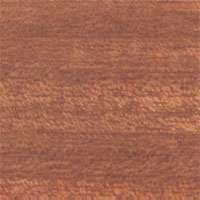
Heartwood Color
| Reddish brown | ||||||||||||
| Pale red to pink | ||||||||||||
| Pale brown | ||||||||||||
| Darkens with age | ||||||||||||
| Dark brown | ||||||||||||
| Brown |
Sapwood Color
| White | ||||||||||||
| Yellow | ||||||||||||
| Different than heartwood | ||||||||||||
| Paler than heartwood | ||||||||||||
| White to yellow | ||||||||||||
| Whitish | ||||||||||||
| Well defined | ||||||||||||
| Not always clearly defined |
Grain
| Interlocked | ||||||||||||
| Figure | ||||||||||||
| Distinct (figure) | ||||||||||||
| Straight | ||||||||||||
| Wavy | ||||||||||||
| Even | ||||||||||||
| Closed | ||||||||||||
| Stripe (figure) | ||||||||||||
| Rippled (figure) | ||||||||||||
| Rays (figure) |
| Interlocked | ||||||||||||
| Distinct figure | ||||||||||||
| Straight | ||||||||||||
| Wavy | ||||||||||||
| Striped figure | ||||||||||||
| Rippled figure | ||||||||||||
| Rays figure | ||||||||||||
| Occasionally wavy | ||||||||||||
| Generally interlocked |
High rays produce a distinct attractive figure on radial surfaces.
Texture
| Medium | ||||||||||||
| Coarse | ||||||||||||
| Medium | ||||||||||||
| Medium to coarse |
Luster
| Low | ||||||||||||
| Lustrous | ||||||||||||
| Pronounced | ||||||||||||
| Slightly lustrous | ||||||||||||
| Dull |
Natural Growth Defects
| Brittleheart is often frequent and extensive | ||||||||||||
| Gum and mineral deposits |
Natural Durability
| Perishable | ||||||||||||
| Non-durable | ||||||||||||
| Non-resistant to termites | ||||||||||||
| Susceptible to insect attack | ||||||||||||
| Moderately durable | ||||||||||||
| Susceptible to attack from powder post (Lyctid & Bostrychid) beetles | ||||||||||||
| Durable | ||||||||||||
| Moderately resistant to termite (Isoptera) attack | ||||||||||||
| Resistant to attack from powder post (Lyctid & Bostrychid) beetles | ||||||||||||
| Pinworms (ambrosia beetles) are commonly present | ||||||||||||
| Susceptible to marine borer attack | ||||||||||||
| Sapwood susceptible to attack by powder post beetles | ||||||||||||
| Resistant to decay | ||||||||||||
| Resistant to attack from termites (Isoptera) | ||||||||||||
| Non durable |
Odor
| Unpleasant odor | ||||||||||||
| No specific taste |
Toxicity
| Dermatitic effects |
Kiln Schedules
| Drying (speed) is fast | ||||||||||||
| Dry at a slow speed | ||||||||||||
| Kiln Drying Rate (in days) is fairly rapid | ||||||||||||
| UK=E US=T6D2/T3D1 Fr=5 | ||||||||||||
| T6-D2 (4/4) US | ||||||||||||
| T3 – D1 (8/4) US | ||||||||||||
| Schedule E (4/4) United Kingdom |
Drying Defects
| Slight end splitting | ||||||||||||
| Slight surface checking | ||||||||||||
| Moderate twist/warp | ||||||||||||
| Slight collapse and honeycomb | ||||||||||||
| No collapse/honeycomb | ||||||||||||
| Slight distortion | ||||||||||||
| Expect resin/gum exudation |
Ease of Drying
| Easy | ||||||||||||
| Dries rapidly with little degrade |
Kiln Drying Rate
| Fairly rapid (11-17 days for boards under 32 mm, to 31-51 days for boards greater than 63 mm) |
Tree Identification
| Bole/stem form is buttressed | ||||||||||||
| Bole/stem form is cylindrical | ||||||||||||
| Bole/stem form is straight |
Tree Size
| Bark width is 5-10 mm | ||||||||||||
| Bole length is 0-10 m | ||||||||||||
| Tree height is 0-10 m | ||||||||||||
| Tree height is 10-20 m | ||||||||||||
| Tree height is 20-30 m |
Product Sources
The timber is often marketed with another similar but darker and somewhat heavier wood produced by (H. densiflora) which grows mainly in Central Africa under the trade name Niangon.
The International Tropical Timbers Organization reports that Niangon is a fairly important source of timber in the producing countries, although prduction is decreasing. Niangon is a regular export commodity.
Comments
General finishing qualities are rated as good
Hard, strong wood recommended for external door frames and greenhouses
Blunting Effect
| Blunting effect on machining is moderate | ||||||||||||
| Medium effect | ||||||||||||
| Blunting effect on machining is slight |
Boring
| Easy | ||||||||||||
| Moderately easy | ||||||||||||
| Areas of interlocked grain affect results |
Cutting Resistance
| Cutting Resistance with green wood is easy | ||||||||||||
| Cutting Resistance with dry wood is easy | ||||||||||||
| Difficult to saw | ||||||||||||
| Cutting Resistance with green wood is variable | ||||||||||||
| Cutting resistance with dry wood is variable |
Gluing
| Easy to glue | ||||||||||||
| Difficult to glue | ||||||||||||
| May require surface treatment for best results | ||||||||||||
| Glues well |
Pre-Treatment of the surface with a caustic soda solution or ammonia is recommended to remove exuded gum
Moulding
| Poor moulding results | ||||||||||||
| French head recommended |
Movement in Service
| Medium | ||||||||||||
| Moderate movement after manufacture | ||||||||||||
| Large |
Nailing
| Easy to nail | ||||||||||||
| Difficult to nail | ||||||||||||
| Holds nails well | ||||||||||||
| Tends to split during nailing |
Planing
| Easy to plane | ||||||||||||
| Reduction of cutting angle prevents tearing in quartersawn material |
Resistance to Impregnation
| Heartwood is extremely resistant | ||||||||||||
| Sapwood is resistant | ||||||||||||
| Heartwood is resistant | ||||||||||||
| Heartwood is moderately resistant | ||||||||||||
| Extremely resistant |
Response to Hand Tools
| Easy to Work | ||||||||||||
| Easy to machine | ||||||||||||
| Variable qualities | ||||||||||||
| Moderate working qualities | ||||||||||||
| Moderate blunting effect on cutting edges | ||||||||||||
| Difficult to machine |
Sanding
| Easy to sand |
Screwing
| Easy to screw |
Veneering Qualities
| Various figures can yield decorative veneers | ||||||||||||
| There is slight to moderate drying degrade and the potential for buckles and splits | ||||||||||||
| Easy to cut |
Steam Bending
| Moderate | ||||||||||||
| Knots have little impact | ||||||||||||
| Generally moderate | ||||||||||||
| Extremely variable |
Polishing
| Satisfactory results | ||||||||||||
| Good results | ||||||||||||
| Requires a filler |
Staining
| Finish is generally good | ||||||||||||
| Difficult to stain. |
Surface preservation treatments require to be preceded by preparation with ammonia or caustic soda.
Strength Properties
| Density (dry weight) = 38-45 lbs/cu. ft. | ||||||||||||
| Max. crushing strength = medium | ||||||||||||
| Density (dry weight) = 46-52 lbs/cu. ft. | ||||||||||||
| Modulus of Elasticity (stiffness) = very low | ||||||||||||
| Density (dry weight) = 31-37 lbs/cu. ft. | ||||||||||||
| Hardness (side grain) = medium | ||||||||||||
| Bending strength (MOR) = medium | ||||||||||||
| Shrinkage, Radial = small | ||||||||||||
| Shrinkage, Tangential = moderate | ||||||||||||
| Bending strength (MOR) = low | ||||||||||||
| Shearing strength (parallel to grain) = very low | ||||||||||||
| Shrinkage, Volumetric = fairly large | ||||||||||||
| Shrinkage, Radial = moderate | ||||||||||||
| Modulus of Elasticity (stiffness) = low | ||||||||||||
| Hardness (side grain) = soft | ||||||||||||
| Shrinkage, Volumetric = large | ||||||||||||
| Shrinkage, Tangential = small | ||||||||||||
| Shrinkage, Radial = very small | ||||||||||||
| Shearing strength (parallel to grain) = medium | ||||||||||||
| Modulus of Elasticity (stiffness) = medium | ||||||||||||
| Bending strength (MOR) = high | ||||||||||||
| Toughness-Hammer drop (Impact Strength) = low | ||||||||||||
| Shrinkage, Radial = large | ||||||||||||
| Shrinkage, Radial = fairly large | ||||||||||||
| Shearing strength (parallel to grain) = low | ||||||||||||
| Max. crushing strength = high | ||||||||||||
| Toughness-Hammer drop (Impact Strength) = very low | ||||||||||||
| Shearing strength (parallel to grain) = high | ||||||||||||
| Bending strength (MOR) = very high |
Numerical Data
| Item | Green | Dry | English |
| Bending Strength | 9735 | 13714 | psi |
| Density | 40 | lbs/ft3 | |
| Hardness | 1299 | lbs | |
| Impact Strength | 27 | 28 | inches |
| Maximum Crushing Strength | 4721 | 7077 | psi |
| Shearing Strength | 1597 | psi | |
| Stiffness | 1260 | 1448 | 1000 psi |
| Work to Maximum Load | 10 | 10 | inch-lbs/in3 |
| Specific Gravity | 0.5 | 0.52 | |
| Weight | 40 | 39 | lbs/ft3 |
| Radial Shrinkage | 4 | % | |
| Tangential Shrinkage | 8 | % | |
| Item | Green | Dry | Metric |
| Bending Strength | 684 | 964 | kg/cm2 |
| Density | 641 | kg/m3 | |
| Hardness | 589 | kg | |
| Impact Strength | 68 | 71 | cm |
| Maximum Crushing Strength | 331 | 497 | kg/cm2 |
| Shearing Strength | 112 | kg/cm2 | |
| Stiffness | 88 | 101 | 1000 kg/cm2 |
| Work to Maximum Load | 0.70 | 0.70 | cm-kg/cm3 |
| Specific Gravity | 0.5 | 0.52 | |
| Weight | 641 | 624 | kg/m3 |
| Radial Shrinkage | 4 | % |
References
Armstrong, F.H.,1960,The Strength Properties of Timber,Forest Products Research Laboratory, London Bulletin,No.45
Banks, C.H., Schoeman, J.P., Otto, K.P.,1977,The Mechanical Properties of Timbers with particular reference to South,Africa,South African Forestry Research Institute Bulletin,(Ed.,Schoeman, J.P. 1973 & Otto K.P. 1976,No.48
Banks, C.H.,1954,The Mechanical Properties of Timbers with Particular Reference to those,grown in the Union of South Africa,Journal of the South African Forestry Association,No. 24 pp.44-65,[South,African Forestry Journal]
Bentum, A.L.K.,1969,Properties of Ghanaian Timbers – Nyankom (Tarrietia utilis,F.P.R.I. Ghana 33(2, pp21-3
Bolza, E., Keating, W.G.,1972,African Timbers – the Properties, Uses and Characteristics of 700 Species,C.S.I.R.O. Div. of Building Research
Boone, R.S., C.J. Kozlik, P.J. Bois and E.M. Wengert. 1988. Dry Kiln Schedules for Commercial Woods: Temperate and Tropical. United States Department of Agriculture, Forest Service, General Technical Report FPL-GTR-57, Forest Products Laboratory, Madison, Wisconsin.
Brown, W.H.,1969,Properties and uses of Tropical hardwoods in the United Kingdom. Part 1,Nonstructural properties and uses.,Conference on Tropical hardwoods SC-5/TN-5, Syracuse University
Chudnoff, M.,1984,Tropical Timbers of the World,U.S.A. Department of Agriculture, Forest Service, Forest Products,Laboratory, Madison.
Cooper, G.P., Record, S.J.,1931,The Evergreen Forests of Liberia,Yale School Forestry Bulletin,31,pp1-153
Cudjoe, F.S.,1969,A Key to the Family Sterculiaceae in Ghana,Forest Prod. Res. Inst. Ghana Tech. Note, No.7
Erfurth, T., Rusche, H.,1976,The Marketing of Tropical Wood A. Wood Species from African Moist Forests,F.A.O. Forestry Department
Farmer, R.H.,1972,Handbook of Hardwoods,HMSO
Forest Products Research Laboratory, U.K.,1967,The Steam Bending Properties of various timbers,Forest Products Research Laboratory, Princes Risborough, Leaflet,No.45
Forest Products Research Laboratory, U.K.,1969,The Movement of Timbers,Forest Products Research Laboratory, Princes Risborough Technical Note,No.38
Forests Products Research Laboratory, U.K.,1956,A Handbook of Hardwoods,Forest Products Research Laboratory, Princes Risborough, Department of,Science and Industrial Research, Building Research Establishment
France – C.T.F.T./C.T.B.,1982,Guide pour le Choix des Essences Deroulables-pour la fabrication du,contreplaque,C.T.F.T./C.T.B. France
France – C.T.F.T.,1966,Bois Tropicaux,C.T.F.T. Publ.,12
Ghana – Timber Marketing Board,1969,Ghana Hardwoods,Timber Marketing Board
HMSO. 1981. Handbook of Hardwoods, 2nd Edition. Revised by R.H. Farmer. Department of the Environment, Building Research Establishment, Princes Risborough Laboratory, Princes Risborough, Aylesbury, Buckinghamshire.
I.U.F.R.O.,1973,Veneer Species of the World,Assembled at F.P.L. Madison on behalf of I.U.F.R.O. Working Party on,Slicing and Veneer Cutting
Irvine, F.R.,1961,Woody Plants of Ghana,O.U.P. London
ITTO. 1986. Tropical Timber Atlas, Volume 1 – Africa. Prepared for International Tropical Timber Organization (ITTO) by Centre Technique Forestier Tropical (CTFT, Division of CIRAD, 45bis, Avenue de la Belle Gabrielle, Nogent-sur-Marne Cedex, France.
Jay, B.A.,1968,Timbers of West Africa,TRADA, Red Booklet Series
Kinloch, D., Miller, W.A.,1949,Gold Coast Timbers,Govt. Printer Gold Coast
Koelmeyer, K.O.,1954,Silvicultural Notes on Trees – Satin,Ceylon Forester(ns,1(3,pp59-67
Kryn, J.M., Forbes, E.W.,1959,The Woods of Liberia,U.S.A. Department of Agriculture,Forest Products Laboratory, Madison,,Report No. 2159
Kukachka, B.F.,1962,Characters of Some Imported Woods,U.S.A. Department of Agriculture, Forest Products Laboratory, Madison,,Foreign Wood Series,No.2242
Kukachka, B.F.,1970,Properties of Imported Tropical Woods,Forest Research Paper FPL 125
Kunkel, G.,1965,The Trees of Liberia,German Forestry Mission to Liberia Report,No.3
Lavers, G.M. 1967. The Strength Properties of Timbers. Forest Products Research Bulletin, No. 50 (Spersedes Bulletin No. 45). Ministry of Technology, Her Majesty’s Stationery Office, London.
Lavers, G.M.,1983,The Strength Properties of Timber (3rd ed. revised Moore G.L.,Forest Products Research Laboratory, Princes Risborough, Building Research,Establishment Report (formerly Bulletin No.50)
Lincoln, W.A. 1986. World Woods in Color. Linden Publishing Co. Inc. Fresno, California.
Organisation for European Economic Co-operation,1951,African Tropical Timber (Nomenclature, Description,OEEC
Patterson, D.,1988,Commercial Timbers of the World, 5th Edition,Gower Technical Press
Rendle, B.J.,1969,World Timbers (3 Vols.,Ernest Benn Ltd. London
Sallenave, P.,1955,Proprietes Phyiques et Mecaniques des Bois Tropicaux de l’Union Francaise,C.T.F.T
Sallenave, P.,1961,Niangon de C�te D’Iviore et Niangon du Gabon,Bois et Forets des Tropiques,No.76 pp.45-54.
Sallenave, P.,1964,Proprietes Physiques et Mecaniques des Bois Tropicaux (Premier Supplement,C.T.F.T. Publ.,no.23
Savill, P.S., Fox, J.E.D.,1967,Trees of Sierra Leone
Spalt, H.A., Stern, W.L.,1956,Survey of African woods 1,Tropical Woods,115(105,pp 13-38
Spalt, H.A., Stern, W.L.,1959,Survey of Africa Woods 4,Tropical Woods 17(110) pp42-115
Taylor, C.J.,1960,Synecology and Silviculture in Ghana,University College of Ghana Thomas Nelson and Sons
Timber Development Association Ltd.,1955,World Timbers (3 Vols.,Timber Development Association Ltd.
Titmuss, F.H.,1965,Commercial Timbers of the World,Technical Press Ltd., London, 3rd edition
Voorhoeve, A.G.,1965,Liberian High Forest Trees,Centre for Agric. Publishing and Documentation, Wageningen
WCMC. 1992. Conservation Status Listing: Trees and Timbers of the World. World Conservation Monitoring Center (WCMC, Plants Program, 219 Huntingdon Road, Cambridge, CB3 ODL, United Kingdom.
Wood, B., Calnan, D.,1976,Toxic Woods,British Journal of Dermat 94 Suppl. 13