Scientific Name
Testulea gabonensis
Trade Name
Izombe
Family Name
Ochnaceae

Common Names
Ake, Akewa, Akewe, Isombe, Izombe, Magnenti, Mogongou, Mugongu, N’Gwaki, N’komi, Ngron, Rone, Zombe
Regions of Distribution
Africa
Countries of Distribution [VIEW MAP]
Cameroon, Congo, Equatorial Guinea, Gabon, South Africa
Common Uses
Baskets, Bedroom suites, Boat building (general), Boxes and crates, Brush backs & handles, Building materials, Cabinetmaking, Carvings, Chairs, Chests, Clogs, Concealed parts (Furniture), Cooperages, Decorative veneer, Desks, Dining-room furniture, Domestic flooring, Door, Dowell pins, Dowells, Drawer sides, Excelsior, Figured veneer, Fine furniture, Floor lamps, Flooring, Flooring: industrial heavy traffic, Furniture , Furniture components, Furniture squares or stock, Furniture, Hatracks, Heavy construction, Interior construction, Interior trim, Joinery (external): ground contact, Joinery, Kitchen cabinets, Light construction, Living-room suites, Mathematical instruments, Millwork, Mine timbers, Moldings, Office furniture, Paneling , Paneling, Parquet flooring, Plywood corestock, Plywood, Radio – stereo – TV cabinets, Rustic furniture, Skis, Stools, Sub-flooring, Tables , Toys, Turnery, Veneer, Veneer: decorative, Windows
Environmental Profile
| Status unknown in some areas due to inadequate information | ||||||||||||
| Generally secure within most of its natural habitat, but note exceptions. | ||||||||||||
| Extinct, Endangered, Vulnerable, or Rare within parts of its range | ||||||||||||
| Data source is World Conservation Monitoring Center |
Classified as either Extinct, Endangered, Vulnerable, or Rare in Cameroon. Its status in the wild in Equatorial Guinea and Gabon is listed as unknown due to insufficient information
Distribution Overview
Found mainly in Gabon. It also grows in Cameroon and throughout the equatorial forests of West Africa. usually scattered in dense primary forests and transitional zones.
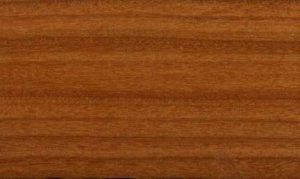
Heartwood Color
| Brown | ||||||||||||
| Red | ||||||||||||
| Yellow | ||||||||||||
| Purple | ||||||||||||
| Pink | ||||||||||||
| Yellow to golden-yellow to orange | ||||||||||||
| Reddish brown | ||||||||||||
| Pale red to pink | ||||||||||||
| Greenish to greyish |
The heartwood varies from orange-yellow, gray-yellow, to pinkish-yellow with a gray hue.
Sapwood Color
| White | ||||||||||||
| Brown | ||||||||||||
| Yellow | ||||||||||||
| Green/Grey | ||||||||||||
| Pinkish | ||||||||||||
| White to yellow | ||||||||||||
| Not clearly differentiated from the heartwood |
Grain
| Straight | ||||||||||||
| Figure | ||||||||||||
| Closed | ||||||||||||
| Even | ||||||||||||
| Stripe (figure) | ||||||||||||
| Wavy | ||||||||||||
| Interlocked | ||||||||||||
| Weak (figure) |
| Straight | ||||||||||||
| Striped figure | ||||||||||||
| Weak figure | ||||||||||||
| Wavy | ||||||||||||
| Interlocked |
May occasionally be slightly interlocked, producing a ribbon or wavy figure
Texture
| Fine | ||||||||||||
| Medium | ||||||||||||
| Coarse | ||||||||||||
| Fine | ||||||||||||
| Even textured |
A dark resinous substance is sometimes present in some cells.
Natural Growth Defects
| Gum/resin exudation |
Natural Durability
| Durable | ||||||||||||
| Perishable | ||||||||||||
| Moderately durable | ||||||||||||
| Resistant to termites | ||||||||||||
| Non-durable | ||||||||||||
| Non-resistant to powder post beetles | ||||||||||||
| Susceptible to insect attack | ||||||||||||
| Resistant to attack from termites (Isoptera) | ||||||||||||
| Resistant to attack from powder post (Lyctid & Bostrychid) beetles | ||||||||||||
| Durable | ||||||||||||
| Very durable | ||||||||||||
| Sapwood is susceptible to wood staining fungal attack | ||||||||||||
| Resistant to wood staining fungal attack | ||||||||||||
| Susceptible to marine borer attack | ||||||||||||
| Sapwood is prone to stain | ||||||||||||
| Resistant to attack from pinworms (ambrosia beetles) | ||||||||||||
| Heartwood resistant to decay | ||||||||||||
| Good weathering characteristics |
Odor
| No specific smell or taste |
Kiln Schedules
| Drying (speed) is fast | ||||||||||||
| Kiln Drying Rate (in days) is rapid |
Drying Defects
| Collapse | ||||||||||||
| Distortion | ||||||||||||
| Moderate surface checking |
The sapwood is prone to develop blue sap stain
Ease of Drying
| Moderately Difficult to Difficult | ||||||||||||
| Easy | ||||||||||||
| Dries easily with little or no degrade |
Kiln Drying Rate
| Rapid (<10 days for boards < 32 mm, to <30 days for boards >= 63 mm) |
Tree Identification
| Bole/stem form is straight | ||||||||||||
| Bole/stem form is cylindrical | ||||||||||||
| Bole/stem form is buttressed | ||||||||||||
| Bole/stem form is fluted |
Tree Size
| Tree height is 20-30 m | ||||||||||||
| Bole length is 10-20 m | ||||||||||||
| Tree height is 10-20 m | ||||||||||||
| Bole length is 0-10 m | ||||||||||||
| Trunk diameter is 100-150 cm |
Product Sources
The timber is available in lumber form from large importers in the United States, and is usually priced in the moderately high range.
The ITTO reports that timber from this species is produced only occasionally and exported in negligible quantities.
Comments
General finishing qualities are rated as good
Blunting Effect
| Slight dulling effect on cutting tools | ||||||||||||
| Blunting effect on machining is slight |
Boring
| Fair to good results | ||||||||||||
| Fairly easy to very easy | ||||||||||||
| Good boring qualities | ||||||||||||
| Easy |
Bored surfaces are usually clean.
Carving
| Fair to Good Results | ||||||||||||
| Good results |
Cutting Resistance
| Easy to saw | ||||||||||||
| Cutting Resistance with green wood is easy | ||||||||||||
| Cutting Resistance with dry wood is easy | ||||||||||||
| Low resistance to sawing | ||||||||||||
| Cutting Resistance with green wood is moderate |
Gluing
| Easy to glue | ||||||||||||
| Glues well |
Mortising
| Fairly Easy to Very Easy | ||||||||||||
| Fair to Good Results | ||||||||||||
| Easy to mortise |
The wood responds well to mortising operations with ordinary machine tools.
Moulding
| Fair to Good Results | ||||||||||||
| Fairly Easy to Very Easy | ||||||||||||
| Responds well to ordinary machine tools in moulding operations | ||||||||||||
| Good finishing results | ||||||||||||
| Easy to mould |
Movement in Service
| Fair to Good Stability – Medium Movement | ||||||||||||
| Excellent Stability – Small Movement | ||||||||||||
| Stable | ||||||||||||
| Stable when seasoned | ||||||||||||
| Holds shape well after manufacture |
Nailing
| Fairly Easy to Very Easy | ||||||||||||
| Holds nails well | ||||||||||||
| Easy to nail | ||||||||||||
| Possible if prebored |
Planing
| Fair to Good Results | ||||||||||||
| Fairly Easy to Very Easy | ||||||||||||
| Planes well, to a good finish | ||||||||||||
| Good planing properties | ||||||||||||
| Easy to work with all types of tools | ||||||||||||
| Easy to plane | ||||||||||||
| Ease of planing is moderate |
Resistance to Impregnation
| Resistant sapwood | ||||||||||||
| Resistant heartwood | ||||||||||||
| Heartwood is resistant | ||||||||||||
| Resistant to preservative treatment | ||||||||||||
| Heartwood is extremely resistant |
Resistance to Splitting
| Satisfactory | ||||||||||||
| Poor |
Response to Hand Tools
| Easy to Work | ||||||||||||
| Responds Readily | ||||||||||||
| Easy to machine | ||||||||||||
| Responds well to hand tools |
Routing & Recessing
| Fair to Good Results | ||||||||||||
| Fairly Easy to Very Easy | ||||||||||||
| Routs well | ||||||||||||
| Routing is easy |
Sanding
| Fair to Good Results | ||||||||||||
| Fairly Easy to Very Easy | ||||||||||||
| Good sanding finish | ||||||||||||
| Yields relatively smooth surfaces | ||||||||||||
| Good sanding properties |
Screwing
| Screwing yields good results | ||||||||||||
| Easy to screw | ||||||||||||
| Possible if prebored | ||||||||||||
| Good screwing properties |
Turning
| Fair to Good Results | ||||||||||||
| Fairly Easy to Very Easy | ||||||||||||
| Good results | ||||||||||||
| Easy to turn | ||||||||||||
| Yields clean surfaces |
Veneering Qualities
| Bolt preparation requires steaming | ||||||||||||
| Suitable for slicing | ||||||||||||
| Moderately easy to veneer | ||||||||||||
| Easy to cut |
Steam Bending
| Moderate | ||||||||||||
| Good |
Painting
| Satisfactory results | ||||||||||||
| Good results |
Polishing
| Fair to Good Results | ||||||||||||
| Good results |
Staining
| Good staining qualities |
Varnishing
| Satisfactory | ||||||||||||
| Good results |
Strength Properties
| Bending strength (MOR) = medium | ||||||||||||
| Shrinkage, Radial = small | ||||||||||||
| Max. crushing strength = high | ||||||||||||
| Bending strength (MOR) = high | ||||||||||||
| Shrinkage, Tangential = moderate | ||||||||||||
| Max. crushing strength = medium | ||||||||||||
| Density (dry weight) = 46-52 lbs/cu. ft. | ||||||||||||
| Shrinkage, Tangential = small | ||||||||||||
| Shrinkage, Radial = moderate | ||||||||||||
| Shearing strength (parallel to grain) = medium | ||||||||||||
| Modulus of Elasticity (stiffness) = medium | ||||||||||||
| Modulus of Elasticity (stiffness) = low | ||||||||||||
| Density (dry weight) = 38-45 lbs/cu. ft. | ||||||||||||
| Very heavy | ||||||||||||
| Shrinkage, Tangential = fairly large | ||||||||||||
| Shearing strength (parallel to grain) = low | ||||||||||||
| Modulus of Elasticity (stiffness) = very low | ||||||||||||
| Density (dry weight) = 53-60 lbs/cu. ft | ||||||||||||
| Dense | ||||||||||||
| Compression strength (parallel to grain) = high | ||||||||||||
| Bending strength (MOR) = very high |
Numerical Data
| Item | Green | Dry | English |
| Bending Strength | 11843 | 16696 | psi |
| Density | 46 | lbs/ft3 | |
| Maximum Crushing Strength | 5543 | 8535 | psi |
| Shearing Strength | 2043 | psi | |
| Stiffness | 1441 | 1704 | 1000 psi |
| Specific Gravity | 0.59 | 0.76 | |
| Weight | 48 | 45 | lbs/ft3 |
| Radial Shrinkage | 3 | % | |
| Tangential Shrinkage | 6 | % | |
| Volumetric Shrinkage | 10 | % | |
| Item | Green | Dry | Metric |
| Bending Strength | 832 | 1173 | kg/cm2 |
| Density | 737 | kg/m3 | |
| Maximum Crushing Strength | 389 | 600 | kg/cm2 |
| Shearing Strength | 143 | kg/cm2 | |
| Stiffness | 101 | 119 | 1000 kg/cm2 |
| Specific Gravity | 0.59 | 0.76 | |
| Weight | 769 | 721 | kg/m3 |
| Radial Shrinkage | 3 | % | |
| Tangential Shrinkage | 6 | % |
References
Banks, C.H., Schoeman, J.P., Otto, K.P.,1977,The Mechanical Properties of Timbers with particular reference to South,Africa,South African Forestry Research Institute Bulletin,(Ed.,Schoeman, J.P. 1973 & Otto K.P. 1976,No.48
Bois et Forets des Tropiques,1990,Izombe (Testulea gabonensis,Bois et Forets des Tropiques No.225 (3) 65
Bolza, E., Keating, W.G.,1972,African Timbers – the Properties, Uses and Characteristics of 700 Species,C.S.I.R.O. Div. of Building Research
Chudnoff, M.,1984,Tropical Timbers of the World,U.S.A. Department of Agriculture, Forest Service, Forest Products,Laboratory, Madison.
Erfurth, T., Rusche, H.,1976,The Marketing of Tropical Wood A. Wood Species from African Moist Forests,F.A.O. Forestry Department
Fortin, Y., Poliquin, J.,1976,Natural Durability and Preservation of 100 Tropical African Woods,International Development Research Centre, Canada
France – C.T.F.T.,1977,Promotion of African Timbers – New Species,CTFT,35 Leaflets
HMSO. 1981. Handbook of Hardwoods, 2nd Edition. Revised by R. H. Farmer. Department of the Environment, Building Research Establishment, Princes Risborough Laboratory, Princes Risborough, Aylesbury, Buckinghamshire.
ITTO. 1986. Tropical Timber Atlas, Volume 1 – Africa. International Tropical Timber Organization (ITTO) and Centre Technique Forestier Tropical (CTFT, 45bis, Avenue de la Belle Gabrielle, Nogent-sur-Marne Cedex, France.
ITTO. New Marketable Species Technical Notes. Prepared by Centre Technique Forestier Tropical (CTFT, Division of CIRAD, 45 bis, Avenue de la Belle Gabrielle, 94736 Nogent-sur-marne Cedex, France
Kline, M. 1986. Testulea gabonensis – Izombe. In A Guide to Useful Woods of the World. Flynn Jr., J.H., Editor. King Philip Publishing Co, Portland, Maine. 1994. Page 344.
Lincoln, W.A. 1986. World Woods in Color. Linden Publishing Co. Inc., Fresno, California.
Sallenave, P.,1955,Proprietes Phyiques et Mecaniques des Bois Tropicaux de l’Union Francaise,C.T.F.T
Takahashi, A.,1978,Compilation of Data on the Mechanical Properties of Foreign Woods (Part,III) Africa,Shimane University, Japan, Research Report on Foreign Wood No. 7
WCMC. 1992. Conservation Status Listing – Trees and Timbers of the World, World Conservation Monitoring Centre, Plants Programme, 219 Huntingdon Road, Cambridge, CB3 ODL, United Kingdom.